

Best Fundraising Ideas for Small Church Groups
Table of Contents
- Best Fundraising Ideas for Small Church Groups: Quick Wins and Long-Term Strategies
- Quick and Easy Fundraising Ideas for Immediate Results
- Low-Cost Church Fundraisers That Maximize Profit
- Church Fundraising Ideas for Youth Groups
- Online Fundraising for Churches: Digital Giving Made Simple
- Fundraising Events for Small Churches: Community-Focused Approaches
- Measuring Fundraising Success and Avoiding Common Pitfalls
- Integrating Fundraising with Spiritual Mission and Stewardship
Best Fundraising Ideas for Small Church Groups
Last Updated: July 23, 2026
Finding the right fundraising ideas for small church groups requires balancing simplicity with profitability when volunteer capacity and budgets are limited. At Scratch & Give Fundraising, we've worked with hundreds of small churches to identify strategies that actually work. Below are proven fundraising strategies organized by approach so you can pick what fits your congregation's strengths.
Quick and Easy Fundraising Ideas for Immediate Results
When you need money fast, scratch-off fundraising cards and simple community events deliver the highest return with minimal complexity.
Scratch-Off Fundraising Cards: The Fastest Path to Revenue
Scratch-off cards represent one of the highest-profit fundraising methods available to small churches. Each card typically sells for $1-$5, with profit margins reaching up to 100% depending on your supplier and sales volume. Buyers scratch off the coating to reveal a prize or donation amount underneath. The appeal is immediate, people enjoy the tactile experience and element of surprise. For small churches, a single batch of cards can raise $500-$2,000 with just 20-30 volunteers selling over 2-3 weeks.
Scratch & Give Fundraising specializes in this approach, offering customizable cards with one-business-day design turnaround and two-business-day printing and shipping. Their model eliminates the inventory problem many churches face, you order what you can realistically sell and aren't stuck with unsold cards months later.
Bake Sales and Potluck Dinners: Community Connection with Profit
Combine a bake sale with a potluck dinner for maximum impact. Attendees bring main dishes and side dishes while the church provides baked goods for dessert. Charge $8-$12 per plate. The math: 50 people at $10 per plate generates $500 in revenue. Baked goods cost roughly $50 to produce, leaving $450 profit. Advertise 2-3 weeks in advance and assign someone to handle dietary restrictions.
Car Wash and Yard Sale Combos: Double Revenue from One Event
Pair a car wash with a yard sale to multiply fundraising potential without multiplying effort proportionally. Use the same volunteers, location, and day to serve two customer needs. Charge $15-$20 for a basic car wash, $25 for premium (interior vacuum included). Price yard sale items at $0.25-$5 each. A successful combo event with 30-40 car washes and $300-$400 in yard sale revenue generates $750-$1,000 in a single day.
Low-Cost Church Fundraisers That Maximize Profit
These events require minimal upfront investment while delivering strong returns by relying on volunteer time rather than purchased inventory.
Silent Auctions and Raffle Events: High Revenue with Donated Items
Silent auctions work exceptionally well because you're collecting donations from local businesses and congregation members rather than purchasing inventory. Identify 15-25 items or experiences to auction. Reach out to local restaurants, salons, gyms, and retail shops, many donate items as a tax write-off and marketing opportunity. Ask congregation members to donate experiences, home-cooked dinners, babysitting services, handmade crafts, or vacation rental time. Display items on tables with bid sheets and allow bidding for 1-2 hours. The profit margin on silent auctions can exceed 80% if you secure quality donations.
Raffle events are simpler to execute. Sell raffle tickets at $5-$10 each. Collect donated prizes and draw winners at the end. A raffle with 30 tickets sold at $5 each generates $150 in revenue with virtually no cost.
Talent Shows and Trivia Nights: Low-Cost Entertainment with Revenue
Talent shows and trivia nights generate revenue through ticket sales and concessions while requiring minimal upfront investment. For a talent show, invite congregation members to perform and charge $5-$10 admission. Sell concessions (popcorn, candy, drinks). A talent show with 75 attendees at $7 admission plus $200 in concession sales generates $725 in revenue.
Trivia nights work similarly. Divide attendees into teams of 4-6 people and charge $10-$15 per person or $50-$75 per team. A trivia night with 60 people at $12 per person generates $720 in admission revenue, plus $150-$200 in concessions.
Book Sales and Craft Fairs: Using Community Talent
Book sales tap into your congregation's existing possessions. Ask members to donate books they've finished reading. Collect for 2-3 weeks, sort by category, and price at $0.50-$2 each. A book sale with 500-700 books generates $400-$600 in revenue with virtually no upfront cost.
Craft fairs invite congregation members and community crafters to sell handmade items. You take a 10-20% commission on sales. A craft fair with 10-15 vendors averaging $150 per vendor generates $150-$225 in commission revenue for the church.
| Fundraiser Type | Startup Cost | Revenue Potential | Volunteer Hours | Best For |
|---|---|---|---|---|
| Scratch-off cards | $200-$500 | $800-$2,000 | 40-60 hours | Quick revenue, minimal logistics |
| Bake sale + potluck | $50-$100 | $400-$600 | 30-40 hours | Community building, reliable profit |
| Car wash + yard sale | $75-$150 | $700-$1,000 | 25-35 hours | High-traffic locations, single day |
| Silent auction | $0 (donations) | $500-$1,500 | 20-30 hours | Using local business relationships |
| Talent show | $100-$200 | $600-$900 | 35-50 hours | Engagement and entertainment value |
| Book sale | $0 (donations) | $400-$600 | 15-20 hours | Low effort, community participation |
Church Fundraising Ideas for Youth Groups
Youth groups face unique challenges: limited experience, smaller volunteer pools, and the need to make fundraising feel relevant. These approaches align fundraising with youth development and community service.
Mission Trip Fundraising Campaigns: Purpose-Driven Giving
Mission trips inspire generous giving because donors see direct connection between their contribution and meaningful impact. Start with a kickoff event where youth present trip plans, show videos, and explain specific work. Follow with a multi-month campaign combining peer-to-peer fundraising, service projects, and direct appeals. Each youth member sets a personal fundraising goal and reaches out to family, friends, and neighbors.
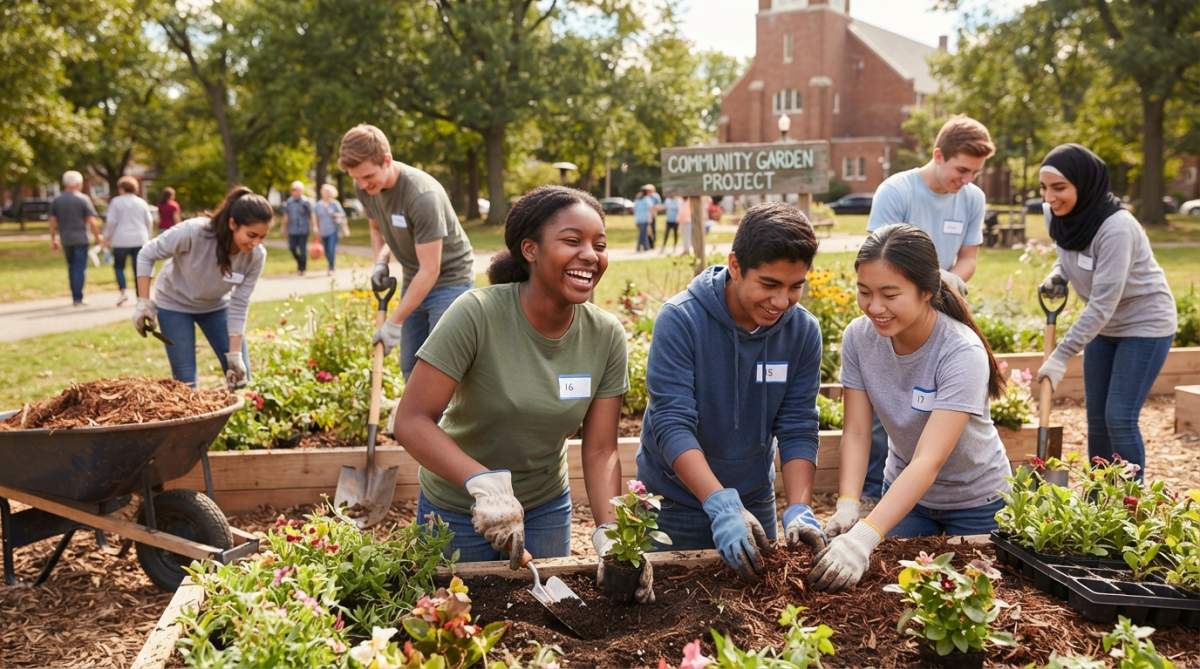
Organize service projects where youth earn money for the trip. They might rake leaves, clean gutters, or provide yard work services at $15-$25 per hour. A youth group with 15 members each completing 20 hours at $20/hour generates $6,000 in trip funding.
Youth-Led Service Projects: Earning While Serving
Service projects create fundraising opportunities while teaching youth the value of work and community contribution. Examples include snow shoveling, leaf raking, car washing, babysitting, or dog walking. Organize projects in teams of 2-3 and promote through social media, church bulletin, and direct outreach. Charge competitive rates: $20-$30 for leaf raking, $25-$35 for snow shoveling, $15-$20 for dog walking, $12-$15 per hour for babysitting. A youth group with 10 members each completing 15 hours at an average rate of $18/hour generates $2,700 in fundraising revenue.
Peer-to-Peer Fundraising for Youth Causes
Peer-to-peer fundraising leverages digital platforms to enable youth to create personal fundraising pages and share them with their networks. Set up a campaign on a platform like Donorbox or Givelify. Create individual fundraising pages for each youth member with unique URLs they can share via text, email, or social media. A youth group with 15 members each raising $200-$300 through peer-to-peer fundraising generates $3,000-$4,500 in campaign revenue.
Online Fundraising for Churches: Digital Giving Made Simple
Digital fundraising removes barriers to giving and reaches donors beyond your geographic location.
Mobile Giving and Text-to-Give Platforms: Frictionless Donations
Mobile giving transforms how people donate. Instead of writing a check or carrying cash, donors give via text message or mobile app. According to Tithely's research on church giving trends, churches that implement text-to-give see a 23% increase in overall giving within the first 90 days. Set up a text-to-give number through a platform like Txt2Give or Tithely. Promote during services, in your bulletin, and on your website. Display: "Text GIVE to [number] to donate." The entire process takes 30 seconds.
Social Media Fundraising Campaigns: Reaching Beyond Your Walls
Structure campaigns around storytelling. Share videos or photos showing the impact of your church's work. Include a clear call-to-action and donation link in every post. Post 2-3 times per week during a campaign with different stories and angles. Facebook's nonprofit fundraising tools enable you to create fundraising campaigns directly on the platform. Facebook handles payment processing and provides donors with tax receipts. You keep 100% of donations.
Virtual Events and Online Auctions: Expanding Reach
Virtual events reach people who can't attend in-person gatherings. Host events via Zoom and charge admission ($10-$25 per person) or accept donations. Online auctions work similarly to in-person silent auctions but with expanded reach. Photograph items, write compelling descriptions, post on your website or an auction platform, and set auction duration (typically 3-7 days). Virtual events require less logistical coordination than in-person events, resulting in higher profit margins.
Fundraising Events for Small Churches: Community-Focused Approaches
Community-focused events build relationships while raising money.
Pancake Breakfasts and Community Dinners: Reliable Revenue
Pancake breakfasts are simple to execute, relatively inexpensive, and appeal to broad audiences. Serve pancakes, eggs, bacon, and coffee for about $2-$3 per person and charge $8-$12 per plate. Host on a Saturday or Sunday morning and promote a month in advance. A breakfast with 100 attendees at $10 per plate generates $1,000 in revenue with roughly $250-$300 in food costs, leaving $700+ in profit.
Seasonal and Holiday Fundraisers: Timing Matters
Seasonal fundraisers align with existing community activities and spending patterns.
Spring: Host a plant sale. Ask congregation members to propagate plants from their gardens. Sell at $3-$8 each. A sale with 200-300 plants generates $600-$2,400.
Summer: Organize a community picnic or outdoor festival. Charge admission and sell food. Partner with local businesses for sponsorships. A festival with 200 attendees at $5 admission plus $300 in food sales and $500 in sponsorships generates $1,500.
Fall: Host a harvest festival or pumpkin patch. Charge by weight or offer flat rates ($5-$15 per pumpkin). A pumpkin patch with 100 visitors spending an average of $15 each generates $1,500.
Winter: Organize a holiday bazaar or Christmas tree sale. Sell handmade ornaments, wreaths, and holiday decorations. A holiday bazaar can generate $1,000-$2,000.
Building Fund Capital Campaigns: Long-Term Giving
Capital campaigns raise money for substantial goals: building renovations, new facilities, or major repairs. These campaigns typically run 6-12 months. Define your goal clearly with specific need, timeline, and impact. Show architectural renderings so donors visualize the outcome.
Segment your donor base. Identify major donors (capable of giving $1,000+), mid-level donors ($500-$1,000), and broad-base donors ($1-$500). Approach major donors personally. Provide multiple giving options: lump sum gifts, monthly pledges over 12 months, or memorial gifts. Track progress publicly with a thermometer in your sanctuary showing campaign progress.
Measuring Fundraising Success and Avoiding Common Pitfalls
Small churches often struggle with fundraising not because they lack good ideas, but because they don't track results or learn from experience.
Setting Realistic Goals for Very Small Churches
A church with 40 members faces different constraints than a church with 400 members. Calculate your volunteer capacity first. If you have 8-10 people willing to commit 20 hours to a fundraiser, that limits which events are realistic. Based on volunteer capacity, estimate realistic revenue. If a pancake breakfast generates $1,000 and you can do 2 per year, that's $2,000. Add a yard sale ($500), book sale ($400), and peer-to-peer fundraising ($1,500) for $4,400 in annual fundraising. Set achievable goals with your actual resources.
Tracking Donations and Managing Inventory
Without tracking systems, you can't measure what's working. For every fundraiser, track total attendance, total revenue, total expenses, volunteer hours required, and net profit. Use a simple spreadsheet. After 6-12 months, review the data to identify which fundraisers generated the most revenue and required the fewest volunteer hours.
Assign someone responsibility for inventory coordination. Set clear timelines: collect items for 2 weeks, store for 1 week, hold the event, donate unsold items within 1 week.
Legal and Tax Considerations for Church Fundraising
Nonprofit status and tax-deductibility: Donations to your church are tax-deductible if your church is a registered 501(c)(3) nonprofit. Verify your status with the IRS.
Raffle and gambling regulations: Many states regulate raffles and games of chance. Some require permits. Research your state's specific regulations before hosting a raffle.
Food safety regulations: If you're selling food, some jurisdictions require commercial kitchen preparation. Check your local health department regulations.
Merchandise sales tax: If you're selling items, you may owe sales tax depending on your state.
Donor privacy and data security: If you're collecting payment information online, use secure payment processors (Stripe, PayPal, Square) that handle encryption and PCI compliance.
IRS guidance on nonprofit fundraising compliance provides detailed information on tax obligations and regulations.
Integrating Fundraising with Spiritual Mission and Stewardship
The most effective fundraising for churches isn't transactional, it's integrated with your spiritual mission and teaches stewardship values. Frame fundraising as an expression of generosity and service. A mission trip fundraiser teaches youth to give sacrificially and serve others. A building campaign helps the congregation invest in a shared space for ministry.
Connect fundraising goals to spiritual outcomes. Instead of "We're raising $5,000," say "We're raising $5,000 to send 15 youth on a mission trip where they'll serve 50 families and learn the joy of giving their time and talents." Celebrate generosity publicly and share stories of donors, volunteers, and participants.
The challenge many small churches face isn't finding fundraising ideas, it's finding ideas that fit their actual capacity and align with their spiritual mission. The strategies in this guide work because they're realistic for small congregations, profitable enough to matter, and flexible enough to adapt to your specific context.
If you're looking for a fundraising method that combines simplicity with high profit potential, scratch-off fundraising cards from Scratch & Give Fundraising deliver results. Their customizable cards feature professional design with one-business-day turnaround, quick shipping, and profit margins up to 100%. Small churches using their cards consistently raise $1,500-$3,000 per campaign with minimal volunteer coordination. Start with Scratch & Give Fundraising and build sustainable fundraising momentum for your church.
Frequently Asked Questions
What are the best fundraising ideas for very small churches with fewer than 50 members?
Very small churches thrive with low-overhead, high-engagement ideas. Scratch-off fundraising cards require minimal volunteer coordination and generate up to 100% net profit. Bake sales, potlucks, and yard sales leverage existing community connections. Online giving platforms like Tithely or Donorbox reduce logistical burden while reaching members who prefer digital donations. Focus on ideas that build stewardship and community rather than requiring large volunteer teams. Avoid inventory-heavy projects that risk unsold stock.
How can small churches raise money using online fundraising without technical expertise?
Online fundraising for churches has become accessible. Platforms like Txt2Give offer free text-to-give with no monthly fees, requiring only a keyword setup. Donorbox provides customizable donation forms with a free tier for churches raising under $1,000 monthly. Givelify offers mobile giving with QR codes for in-person events. Start with one platform, train one volunteer as administrator, and promote it via email and social media. Most platforms include real-time reporting and donor tracking, eliminating manual bookkeeping.
What are the legal and tax implications of church fundraising activities?
Churches are tax-exempt under IRS Section 501(c)(3), but fundraising activities must align with this status. Document all fundraising revenue separately from tithes and offerings for audit purposes. Donations to church fundraisers are generally tax-deductible for donors if properly receipted. Avoid gambling-style raffles (some states restrict these); silent auctions and pledge-based campaigns are safer. Consult your denomination's guidelines and a local tax professional to ensure compliance with state registration requirements for charitable solicitations.
How do I measure fundraising success and avoid leftover inventory problems?
Set realistic, measurable goals tied to your actual need, not arbitrary targets. Track revenue, volunteer hours, and net profit (not just gross sales). For product-based fundraisers like scratch cards, pre-sell or use print-on-demand to minimize inventory. Establish a clear inventory management system and assign one volunteer to track sales weekly. Evaluate success by net profit per volunteer hour, not just total dollars raised. After each campaign, document what worked and adjust next time. This data-driven approach prevents the common problem of boxes sitting in garages for months.
What fundraising ideas work best for church youth groups planning mission trips?
Mission trip fundraising benefits from peer-to-peer campaigns and goal-driven narratives. Youth can create personal fundraising pages (via Donorbox or Qgiv) explaining their trip's impact. Combine this with community events: pancake breakfasts, car washes, or talent shows where youth lead the effort. Scratch-off fundraising cards are especially effective for youth groups because they're easy to distribute and manage. Involve youth in planning and execution, this builds stewardship and accountability. Set transparent goals showing how funds support the mission, not just the trip itself.
This article was written using GrandRanker