

15 Fundraising Ideas That Require No Inventory
Table of Contents
- Why Fundraising Ideas That Require No Inventory Matter
- How We Evaluated These No-Inventory Fundraising Ideas
- 1. Online Fundraising Platforms for Quick Donor Engagement
- 2. Peer-to-Peer Fundraising Campaigns That Build Community
- 3. Virtual Events and Webinars: No Physical Goods Needed
- 4. Corporate Matching Gifts and Recurring Donation Strategies
- 5. Print-on-Demand and Shopping-Based Fundraising
- 6. How to Plan a Successful Fundraiser Using Digital Tools
15 Fundraising Ideas That Require No Inventory
Last Updated: July 15, 2026
Many organizations struggle with traditional fundraising methods that demand upfront inventory purchases, storage space, and complex logistics. Fundraising ideas that require no inventory eliminate these barriers entirely, allowing nonprofits, youth groups, and community organizations to launch campaigns immediately without financial risk. The core advantage is simple: no inventory means no upfront costs, no warehousing headaches, and no unsold merchandise eating into your profit margins.
Why Fundraising Ideas That Require No Inventory Matter
Traditional product-based fundraising forces organizations to purchase inventory upfront, hoping it sells. If it doesn't, you're stuck with unsold merchandise and wasted capital. No-inventory fundraising flips this model: you only generate revenue when supporters actually donate or purchase.
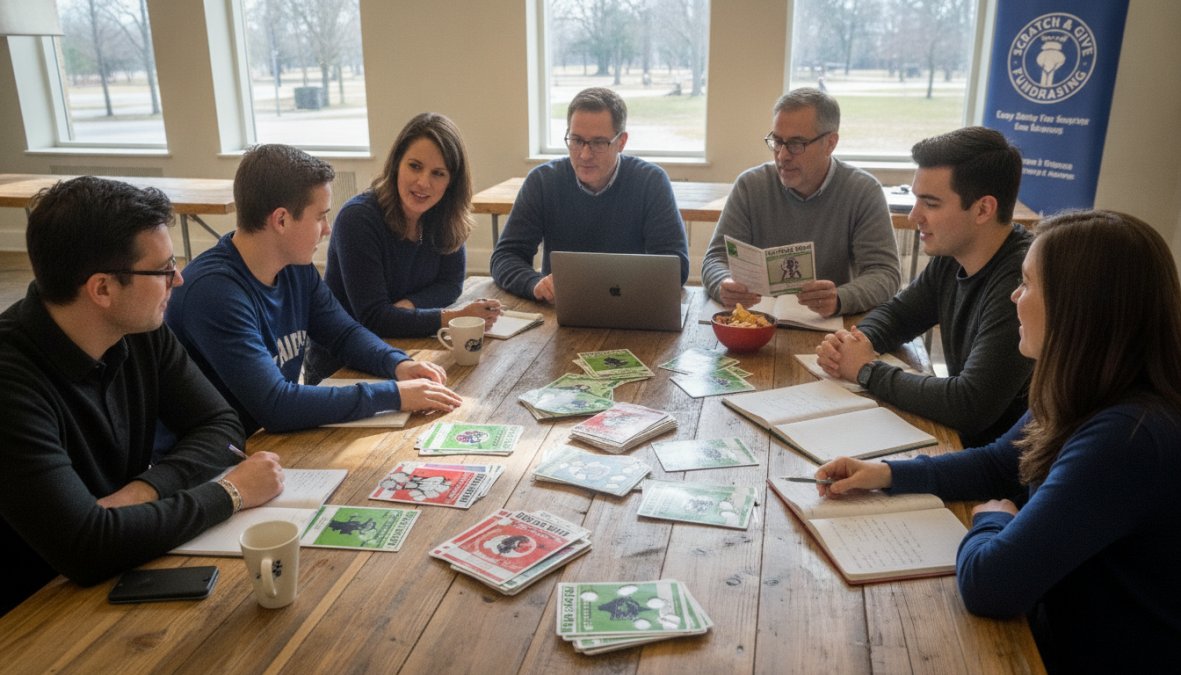
This approach works especially well for organizations with limited budgets, small volunteer teams, or tight timelines. Beyond the financial advantage, no-inventory fundraising builds stronger donor relationships. Instead of asking supporters to buy products they might not want, you're inviting them to invest directly in your mission. Many organizations find that peer-to-peer campaigns and online giving platforms generate more repeat donors than traditional product sales.
How We Evaluated These No-Inventory Fundraising Ideas
We assessed each fundraising idea across five critical dimensions: ease of setup, revenue potential, donor engagement quality, required technical skills, and sustainability for repeat campaigns.
| Fundraising Idea | Setup Time | Revenue Potential | Best For | Repeat-Ability |
|---|---|---|---|---|
| Online fundraising platforms | 1-2 hours | $2,000-$50,000+ | All organizations | Excellent |
| Peer-to-peer campaigns | 3-5 days | $5,000-$100,000+ | Networks of 100+ supporters | Excellent |
| Virtual events | 2-3 weeks | $3,000-$75,000+ | Organizations with 500+ audience | Good |
| Corporate matching gifts | 2-3 hours | $1,000-$25,000+ | Any organization | Excellent |
| Recurring donations | 1-2 hours | $5,000-$200,000+ annually | All organizations | Excellent |
| Gift card programs | 1 hour | $500-$10,000+ | Small to mid-size groups | Good |
| Digital auctions | 1-2 weeks | $2,000-$50,000+ | Organizations with donated items | Good |
| Crowdfunding campaigns | 2-3 days | $1,000-$100,000+ | Specific project-based needs | Fair |
1. Online Fundraising Platforms for Quick Donor Engagement
The fastest way to launch fundraising ideas that require no inventory is through an all-in-one online platform. These tools handle donations, peer-to-peer campaigns, event ticketing, and recurring gifts without managing physical products or payment processing.
Givebutter combines peer-to-peer fundraising, event ticketing, and digital auctions in one interface. Organizations can launch a campaign in under two hours and start accepting donations immediately. The platform includes text-to-donate capabilities, which significantly increases giving during events. Givebutter's strength lies in its engagement features: live auction bidding, fundraiser leaderboards, and social sharing tools.
Donorbox specializes in recurring donations and donor retention. The platform allows you to embed donation forms directly on your website, making giving frictionless. Setup takes about 90 minutes and integrates with most email marketing and CRM systems.
Zeffy takes a different approach: it's completely free for nonprofits with zero platform fees and zero transaction fees. All donations go directly to your organization. For organizations raising under $50,000 annually, Zeffy often generates more net revenue than paid platforms.
2. Peer-to-Peer Fundraising Campaigns That Build Community
Peer-to-peer fundraising transforms your supporters into fundraisers themselves. Instead of asking people to donate, you ask them to fundraise on your behalf. Each fundraiser brings their own network into the campaign, dramatically expanding your reach. The best peer-to-peer campaigns generate 3-5 times more revenue than traditional donation pages.
A peer-to-peer campaign works like this: you create a main fundraising page with your campaign goal and story. Supporters create individual fundraising pages linked to your main page. They share their personal page with friends and family, collecting donations that roll up to your organization's total.
Setting Up Your First Peer-to-Peer Campaign
Start by identifying your most engaged supporters, people who have donated before, attended events, or volunteered. Send them a personal invitation explaining the campaign goal and asking them to fundraise. Provide a template email they can send to their network.
Create a campaign timeline of 4-8 weeks. Set realistic fundraising targets for each person and publish a leaderboard showing top fundraisers; this creates healthy competition and motivates others to increase their goals.
Raisely: Campaign-Focused Fundraising With Automation
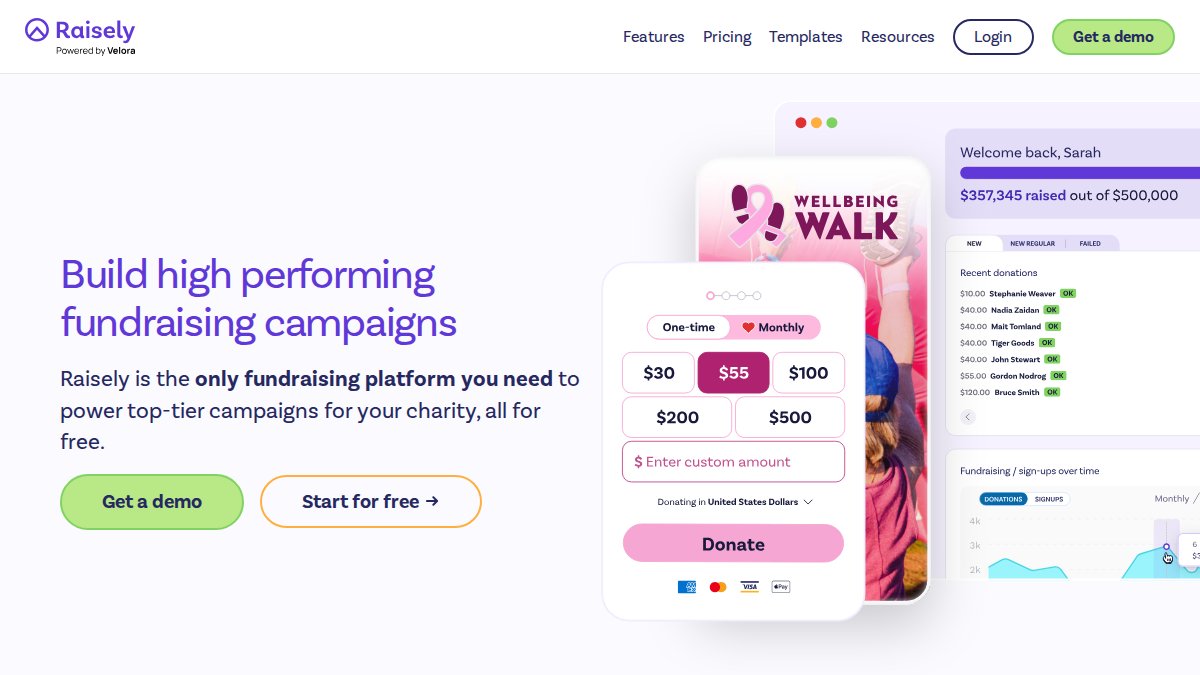
Raisely is purpose-built for peer-to-peer campaigns at scale. The platform includes customizable fundraising pages, automated email sequences that nudge supporters to fundraise, and built-in social sharing tools. The drag-and-drop page builder requires no design skills. Raisely integrates with major email platforms, so you can segment your donor database and target specific groups with personalized campaign invitations.
3. Virtual Events and Webinars: No Physical Goods Needed
Virtual events eliminate the logistics nightmare of in-person fundraisers while reaching a geographically dispersed audience. A single webinar can attract supporters from across the country without venue rental, catering, or transportation costs.
Virtual fundraising events work best when they deliver genuine value to attendees. A fitness class that raises money while helping people stay healthy. A cooking demonstration that teaches a valuable skill. A speaker series featuring inspiring stories from people your organization has helped.
Digital Silent Auctions and Live Bidding
Silent auctions traditionally require physical items and in-person attendance. Digital silent auctions eliminate both constraints. Supporters bid on donated items or experiences through an online platform. Items can be physical (donated by local businesses) or digital (consulting services, online courses, personalized coaching sessions).
The best digital auction items are experiences or services that don't require inventory. A local photographer donates a portrait session. A therapist offers four coaching calls. A restaurant donates a private dinner for eight people.
Virtual Gala and Ticketed Webinar Models
A virtual gala combines live entertainment, storytelling, and fundraising asks into a 2-3 hour online event. Supporters purchase tickets ($25-$150 depending on your audience), then attend a curated program featuring speakers, performances, and an auction.
Ticketed webinars focus on education or skill-building. A nonprofit focused on financial literacy hosts a "Building Wealth in Your 30s" webinar. Attendees pay $15-$25 for access. Your organization retains 100% of ticket revenue minus payment processing fees.
4. Corporate Matching Gifts and Recurring Donation Strategies
Corporate matching gifts are free money sitting on the table that most organizations never claim. When an employee donates to your organization, their employer matches the gift, often 1:1 or 2:1. If your donor gives $500 and their employer matches it, you've just doubled the donation without asking.
After someone donates, send them a simple email: "Did you know your employer might match your gift? Check with your HR department, many companies double charitable donations." Include a link to Benevity or Double the Donation, platforms that let donors search whether their employer offers matching.
Building Recurring Donor Programs for Predictable Revenue
Recurring donations, monthly gifts from supporters, are the most underutilized fundraising strategy. A supporter who gives $50 monthly generates $600 annually. Over five years, that's $3,000 from a single donor.
Recruit recurring donors by highlighting impact over time. "Your $25 monthly gift provides 100 meals per year to families in our community." Make the commitment feel manageable and meaningful. Offer monthly giving as an option on every donation page.
Send monthly or quarterly emails with specific stories, photos, and metrics showing exactly how their gifts are being used.
5. Print-on-Demand and Shopping-Based Fundraising
Print-on-demand platforms eliminate inventory risk while allowing you to sell branded merchandise. Supporters order custom t-shirts, hoodies, or hats with your organization's logo. You don't purchase anything upfront. The platform manufactures and ships each order. You keep a percentage of the sale as profit.
Bonfire: Custom Apparel Without Upfront Cost
Bonfire is the leading print-on-demand platform for nonprofits and community groups. You design a custom product, set your fundraising goal and timeline, and share the campaign link. Supporters order directly. Bonfire manufactures and ships. Your organization receives profit per item sold.
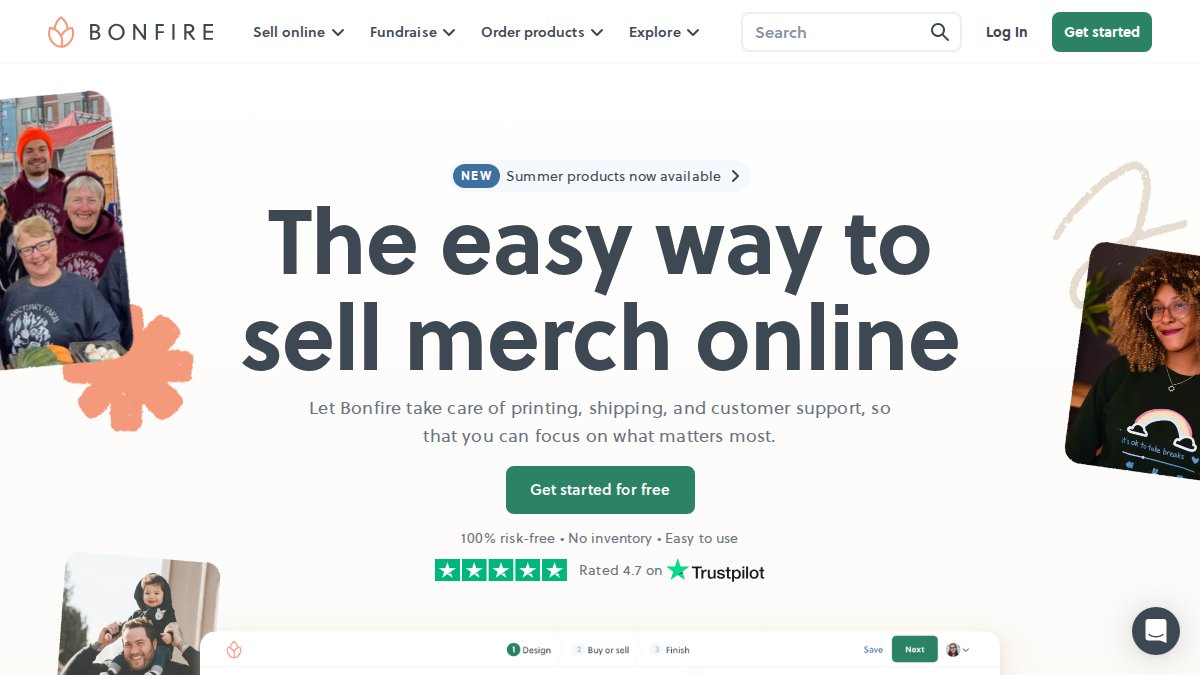
The profit margins are lower than bulk ordering (typically $3-$8 per item), but the risk is zero. There's no minimum order quantity and no unsold inventory.
Gift Card and Catalog Programs With No Inventory Risk
Gift card fundraising works through partnerships with retailers. Your supporters purchase discounted gift cards from you, then redeem them at participating stores. You keep a percentage of the sale (typically 2-10% depending on the retailer).
Supporters buy gift cards they'd purchase anyway, at Target, Amazon, Starbucks, or local restaurants. You generate revenue without any product, inventory, or fulfillment responsibility.
6. How to Plan a Successful Fundraiser Using Digital Tools
Launching fundraising ideas that require no inventory requires strategic planning. The best campaigns start with clear goals, the right technology, and consistent communication.
Define Your Revenue Goals and Timeline
Establish your financial target and deadline before choosing a fundraising strategy. Do you need $5,000 in four weeks or $25,000 over three months? Your goal shapes which strategy works best.
Calculate how much revenue each strategy realistically generates per supporter. If your average donor gives $50, you need 100 donors to hit a $5,000 goal. If your average peer-to-peer fundraiser raises $500, you need 10 fundraisers. Build in buffer time. If your deadline is June 30th, launch campaigns by mid-June.
Choose the Right Tech Stack for Your Fundraising Strategy
Different strategies require different tools. A peer-to-peer campaign needs a platform like Raisely or Givebutter. A virtual event needs streaming software like Zoom or a dedicated event platform. A recurring donor program needs integration between your donation platform and email marketing system.
For most organizations, starting with a single all-in-one platform makes sense. Givebutter, Donorbox, or Zeffy handle donations, recurring gifts, and peer-to-peer campaigns.
Create a Fundraising Email Scripts Plan
Email is your most powerful communication channel. Create a campaign email sequence with 5-7 emails spaced across your fundraising timeline. The first email introduces the campaign and explains why you're fundraising. Subsequent emails tell stories about impact, celebrate milestones, and create urgency.
Each email should have a single clear purpose. Email 1: "Here's what we're raising money for." Email 2: "Meet someone your funds will help." Email 3: "We're halfway to our goal, here's the impact so far." Email 4: "Only one week left, here's what your gift does." Email 5: "Final 48 hours, make your gift today."
Personalize emails when possible. Segment your email list by giving history, interest area, or engagement level. Test subject lines. An email with a compelling subject line gets opened 30-40% more often than a generic one.
7. Scratch & Give Fundraising: The Fastest Path to High-Profit Revenue
While digital platforms and virtual events are powerful, some organizations need immediate, tangible results. Scratch & Give Fundraising offers customizable scratch-off cards that generate up to 100% net profit for youth sports teams, churches, and school clubs.
Supporters don't just donate, they participate in a fun, interactive experience. Each card reveals a prize or donation amount. This gamification increases engagement and makes fundraising feel less like an obligation and more like entertainment.
Scratch & Give Fundraising handles everything. You choose your design. The dedicated design team creates a professional proof within one business day. Cards print and ship within two business days. You sell them. You keep the profits. No inventory risk because you only order what you need, and supporters pay upfront.
Youth groups using Scratch & Give Fundraising have raised over $5,000 in two weeks and $20,000 in three weeks. These results far exceed what most digital campaigns generate in similar timeframes.
8. Community Partnerships and Local Business Collaborations
Local businesses have incentive to support nonprofits; it builds community goodwill and provides tax deductions. A restaurant might donate a percentage of sales on a specific night. A retail store might host a fundraising event where they donate floor space and foot traffic. A professional services firm might offer pro bono work.
Make partnerships mutually beneficial. Explain what the business gains: customer goodwill, tax deduction, positive community perception, employee engagement opportunity. Formalize partnerships with written agreements specifying what the business contributes, what you provide in return, and the timeline.
9. Crowdfunding for Specific Projects and Capital Needs
Crowdfunding platforms like GoFundMe, Kickstarter, and Indiegogo work best for specific, project-based fundraising. You're raising money for a specific outcome: "We're raising $15,000 to build a community garden" or "We need $8,000 to send 20 kids to summer camp."
Specific projects generate 3-5 times more donations than vague appeals. Feature photos and videos of the people or community your project serves. Explain the problem, your solution, and the impact.
10. Recurring Donation Campaigns and Monthly Giving Programs
Monthly giving programs create predictable, sustainable revenue. A supporter who commits to $25 monthly generates $300 annually. Over three years, that's $900 from a single relationship.
Launch a dedicated monthly giving campaign. Create a landing page explaining monthly giving benefits. Feature stories showing the annual impact of a $25 monthly gift. Make the commitment feel achievable and meaningful.
Recruit monthly donors from your most engaged supporters. People who have donated multiple times, attended events, or volunteered are most likely to commit to recurring gifts. Send quarterly impact reports with specific stories and metrics showing how their gifts are making a difference.
11. Text-to-Donate and Mobile Giving Campaigns
Text-to-donate allows supporters to give by texting a keyword to a specific number. They receive a prompt to confirm the donation amount, enter payment information, and complete the gift. The entire process takes 30 seconds.
Text-to-donate works best during events or when you have a captive audience. At a virtual event, announce: "Text HELP to 12345 to donate $25." Text-to-donate generates 2-3 times higher donations during events compared to traditional asking because the barrier to giving is so low.
12. Social Media Fundraising and Peer Sharing Campaigns
Social media campaigns use your supporters' networks to amplify your message. You create shareable content, videos, graphics, and stories that supporters post on their social media. Each share extends your reach to people who don't follow your organization.
The most effective social campaigns include a clear call-to-action. "Share this video to raise awareness" works better than "Please share." Instagram, TikTok, and Facebook are most effective for fundraising. Create content that's emotional, authentic, and shareable.
13. Webinar Series and Educational Content Fundraising
Educational webinars provide genuine value while building your donor base. You host a series of free or low-cost webinars teaching skills or sharing knowledge related to your mission. Attendees pay a small fee ($10-$25) or donate to access the content.
This works best when your organization has expertise to share. A health nonprofit teaching nutrition and wellness. An education nonprofit offering college planning guidance. A career services organization hosting job search masterclasses.
Webinar series create recurring revenue. Once you've created the content, delivering it again requires minimal effort. Promote webinars through your email list, social media, and partner organizations. Record webinars and offer replays to attendees who can't attend live.
14. Corporate Volunteer Engagement and Team Fundraising
Companies increasingly want their employees to volunteer for causes they care about. Corporate volunteer programs create team-building opportunities while generating fundraising revenue.
Structure volunteer projects around fundraising. A company's marketing team volunteers to create marketing materials for your organization. In exchange, the company donates $2,000 and employees fundraise an additional $5,000 from their networks. The company gets team building and positive community impact. You get skilled volunteers and $7,000 in revenue.
Recruit corporate volunteers through your board members and major donors. Pitch the program explaining benefits to the company: team building, community goodwill, employee engagement, and tax deduction.
15. Grant Writing and Foundation Fundraising
While not a "campaign" in the traditional sense, grant funding is a major revenue source that requires no inventory. Foundations, government agencies, and corporate giving programs award grants to nonprofits aligned with their mission.
Grant writing is technical but learnable. You research foundations aligned with your mission, study their funding priorities and requirements, and submit a compelling proposal explaining your organization's work and need.
Grants typically range from $500 to $50,000+ depending on the funder. Government grants can exceed $100,000. Build a grant calendar tracking deadlines. Most foundations have annual funding cycles. Partner with experienced grant writers if possible to strengthen applications.
Fundraising ideas that require no inventory eliminate the biggest barriers to nonprofit fundraising: upfront costs, storage logistics, and inventory risk. Whether you choose online platforms, peer-to-peer campaigns, virtual events, or a combination of strategies, the core principle remains the same: focus on donor engagement and mission impact rather than product sales.
For organizations seeking immediate, high-profit results, Scratch & Give Fundraising offers customizable scratch-off cards with up to 100% net profit, fast design turnaround in one business day, and quick printing and shipping within two business days. Get started with Scratch & Give Fundraising and see how quickly your team can reach its fundraising goals.
Frequently Asked Questions
What are the best fundraising ideas with no upfront cost?
Peer-to-peer fundraising, digital silent auctions, and online donation platforms like Givebutter and Zeffy require zero upfront investment. Virtual events and corporate matching gift campaigns are also cost-free to launch. These fundraising ideas that require no inventory let organizations focus resources on donor engagement rather than product inventory.
How can I raise money for a nonprofit without selling items?
Use online fundraising platforms (Donorbox, Raisely) for direct donations, set up peer-to-peer campaigns where supporters fundraise on your behalf, host virtual events with ticketing, or leverage corporate matching gifts. Service-based fundraising like skill-sharing webinars and community partnerships also generate revenue without physical products or inventory.
What is the most profitable way to fundraise without inventory?
Peer-to-peer fundraising and recurring donation campaigns typically offer the highest profit margins because there are no product costs. Scratch-off cards offer up to 100% net profit with fast turnaround. Virtual events and digital auctions also maximize revenue since overhead is minimal. Focus on donor retention strategies to maximize lifetime value per supporter.
How do I measure ROI for no-inventory fundraising ideas?
Calculate ROI by dividing net revenue by total costs (platform fees, staff time, marketing). Track setup time, immediate results, and donor acquisition cost. Compare profit margins across ideas, peer-to-peer and recurring donations often yield 70-90% net profit, while virtual events average 60-80%. Use analytics from your fundraising platform to monitor performance.
How should I plan a successful fundraiser using digital tools?
Define your revenue goals and timeline first. Select a fundraising platform matching your needs (Givebutter for events, Donorbox for recurring donations). Build a tech stack that integrates with your CRM. Create compelling fundraising email scripts to launch and sustain campaigns. Track donor engagement and adjust your strategy based on real-time analytics from your platform.
This article was written using GrandRanker